
1. Supply Chain Orchestration
The coordination of end-to-end supply chain activities across multiple systems, partners, and tiers — often enabled by AI and digital platforms.
👉 Moves beyond visibility into real-time control and decision-making.
2. Digital Twin (Supply Chain)
A virtual replica of the supply chain used to simulate scenarios, test decisions, and predict outcomes.
👉 Core to “what-if” modelling and proactive planning.
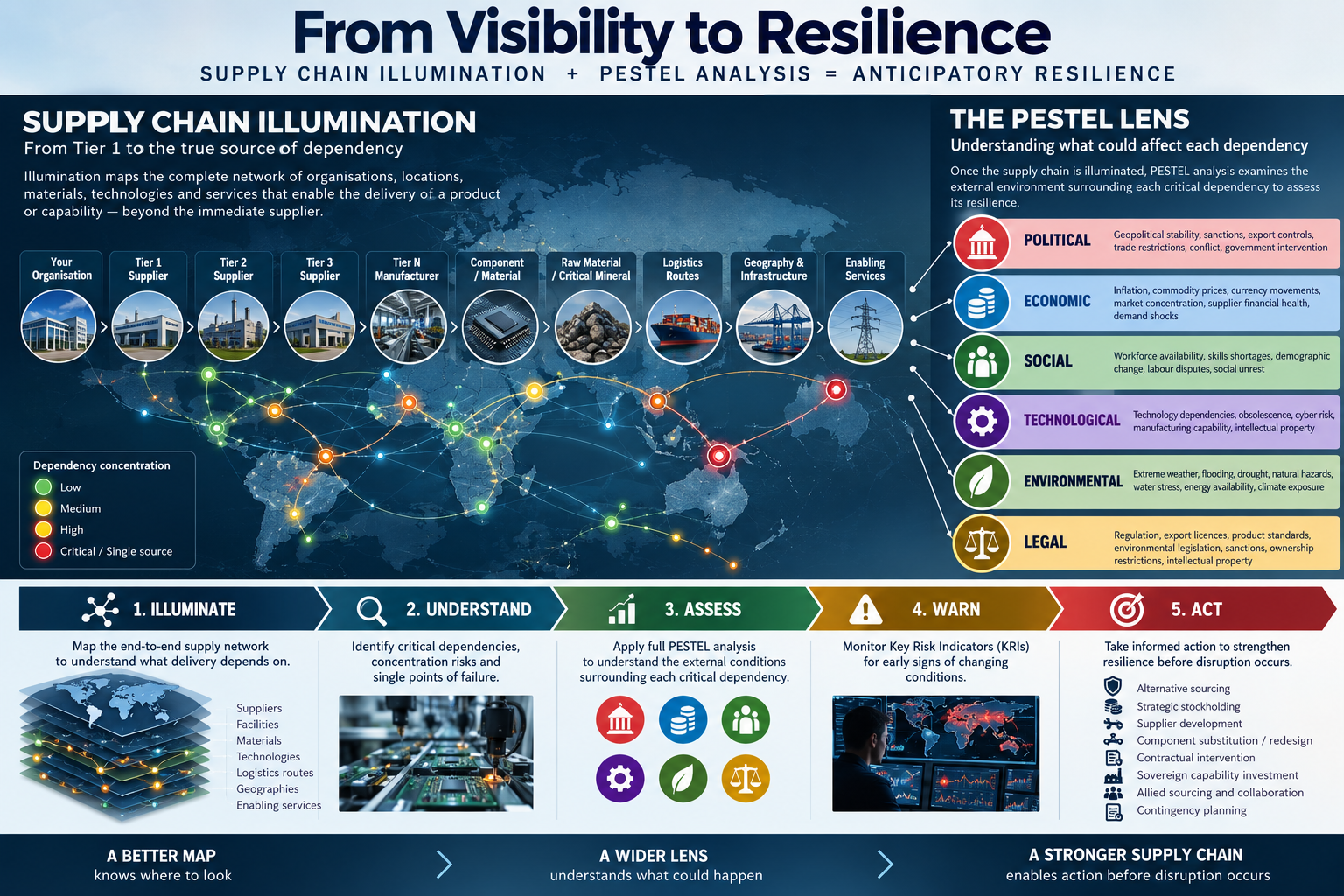
3. End-to-End Visibility
The ability to see materials, data, and risks across all tiers (Tier 1–Tier N).
👉 Not just tracking — understanding dependencies and vulnerabilities.
4. Resilience Engineering
Designing supply chains to absorb, adapt, and recover from disruption.
👉 Focuses on maintaining operational output, not just efficiency.
5. Control Tower
A central hub (physical or digital) that monitors and manages supply chain performance in real time.
👉 Enables faster, data-driven decision-making.
6. Multi-Echelon Inventory Optimisation (MEIO)
Advanced modelling to optimise stock levels across multiple locations simultaneously.
👉 Balances cost vs availability across the whole network, not silos.
7. Demand Sensing
Using real-time data (POS, weather, events, etc.) to adjust short-term forecasts dynamically.
👉 Moves forecasting from historical → responsive.
8. Supply Chain Segmentation
Designing different supply chain strategies based on product, demand, or criticality.
👉 Reinforces: “one size doesn’t fit all.”
9. Carbon-Aware Supply Chains
Integrating emissions data into planning, sourcing, and logistics decisions.
👉 Links sustainability directly to operational decision-making.
10. Adaptive Capacity
The ability of a supply chain to reconfigure itself at pace in response to change.
👉 The shift from resilience → competitive advantage under disruption.


Leave a Reply