
Paul R Salmon FCILT, FSCM
What it is
Supply chain resilience is the ability to prepare for disruption, absorb shocks, adapt quickly, and recover performance without losing control of cost, service, safety, or operational output.
The simple test
A resilient supply chain can answer five questions:
- What matters most?
- What could break it?
- How early would we know?
- What would we do next?
- How fast could we recover?
The 8 core pillars
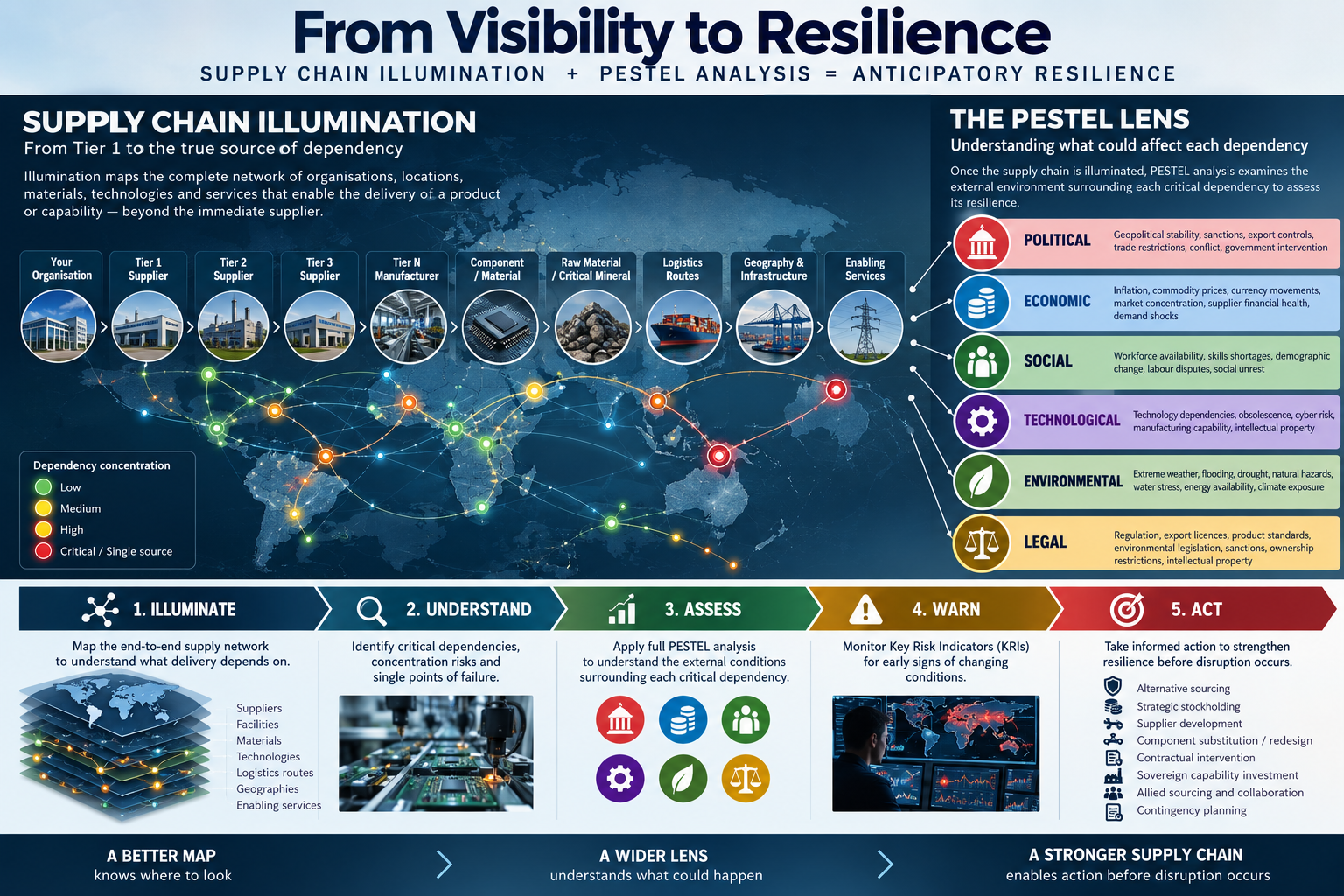
1. Visibility
You cannot protect what you cannot see.
Know your:
- critical items
- single points of failure
- tier 1, tier 2, and key tier 3 suppliers
- inventory, lead times, and in-transit stock
- logistics routes and dependencies
2. Criticality
Not everything needs the same level of attention.
Focus on:
- mission-critical parts
- long lead-time items
- sole-source suppliers
- items with poor substitutability
- components with high operational impact
3. Diversification
Avoid overdependence on one source, one route, one geography, or one system.
Build options through:
- dual sourcing
- regional alternatives
- approved substitutes
- multiple transport routes
- flexible manufacturing or repair options
4. Buffering
Efficiency alone is not resilience.
Use buffers selectively:
- safety stock
- strategic reserves
- surge capacity
- contractual options
- extra transport capacity in critical lanes
5. Agility
The ability to change quickly matters more than a perfect steady-state plan.
Agility comes from:
- fast decision rights
- simplified escalation routes
- pre-agreed contingency plans
- flexible contracts
- empowered teams
6. Data and sensing
Resilience improves when you detect change early.
Watch for:
- lead-time shifts
- supplier distress
- demand spikes
- quality drift
- geopolitical, cyber, and environmental signals
7. Collaboration
Resilience is shared, not owned by one function.
Coordinate across:
- suppliers
- procurement
- logistics
- engineering
- finance
- operations
- customers and end users
8. Learning
Every disruption should improve the system.
After action:
- capture lessons
- update assumptions
- improve data
- revise triggers
- test the plan again
Common threats to resilience
Typical causes of disruption include:
- supplier failure
- geopolitical instability
- cyber attack
- poor data quality
- transport disruption
- quality defects
- demand volatility
- workforce shortages
- regulatory change
- obsolescence
- natural hazards
- over-centralisation
Warning signs of a fragile supply chain
Your supply chain may be fragile if you see:
- one supplier for a critical item
- poor visibility below tier 1
- long lead times with no mitigation
- no substitute parts
- low trust in the data
- no agreed recovery playbooks
- inventory levels based only on budget pressure
- heavy manual workarounds
- slow decision-making
- resilience discussed only after a crisis
Practical resilience metrics
Useful measures include:
- supplier concentration
- percentage of critical items single sourced
- average recovery time
- inventory cover for critical items
- lead-time variability
- forecast accuracy for key demand lines
- on-time delivery for critical suppliers
- proportion of supply chain mapped beyond tier 1
- disruption response time
- fill rate or availability during a disruption
Quick resilience actions
If you want to improve resilience quickly, start here:
In 30 days
- identify top 20 critical items
- highlight sole-source risks
- map top suppliers and routes
- define disruption triggers
- create a simple escalation process
In 90 days
- build contingency plans for critical failures
- agree substitute options
- review stock policies for critical items
- set resilience KPIs
- run a disruption tabletop exercise
In 6–12 months
- map deeper-tier dependencies
- improve supplier risk intelligence
- digitise weak data areas
- embed resilience into contracts
- align resilience investment to operational impact
The balance to remember
Resilience is not about maximum stock or maximum cost.
It is about putting protection where failure hurts most.
A simple formula
Resilience = Visibility + Options + Buffers + Speed of Decision + Ability to Learn
One-line summary
A resilient supply chain does not try to prevent every disruption — it builds the ability to keep delivering when disruption happens.


Leave a Reply